
The Real ROI on Park Model Homes for RV Parks
What The Numbers Reveal About the Real Return on Premium Accommodations
Matt Kraeuter’s path into manufacturing didn’t start on a factory floor. His career began with a stint selling office phone systems in northern New Jersey following his undergraduate studies. Then came law school and a legal career advising a wide variety of businesses, first as outside counsel and later as in-house counsel to a federal defense contractor. Now running Great Outdoor Cottages, Blue Water’s park-model manufacturing affiliate, he’s the one advising park owners about the math on their potentially underutilized site pads and laying it out plainly.
When Kraeuter sat down with Blue Water’s Rafael Correa on the Upstream podcast, he said something worth building a strategy around: “A premium accommodation doesn’t compete with a pad site.” That isn’t just a catchy line. It’s the core argument for why cottages matter to outdoor hospitality right now and why some parks may be leaving money on the table.
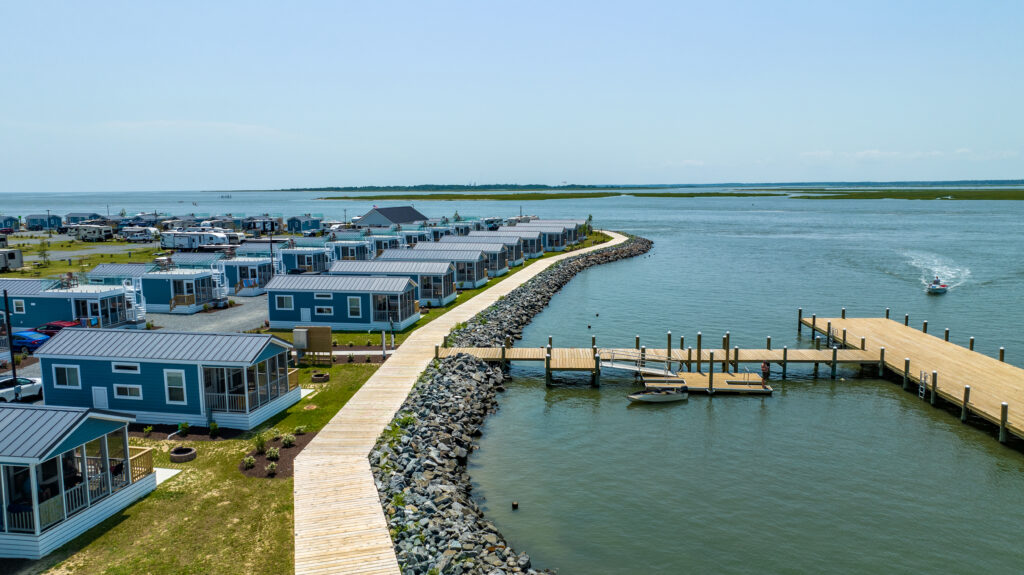
Rule Out the Wrong Competitor
Someone who owns an RV and wants a pad site isn’t generally choosing between that pad and a cottage. Those are different customers making different decisions. The person shopping for a cottage is comparing it to a hotel room, an Airbnb or a VRBO. Two bedrooms instead of adjoining rooms. No worrying about kids running down a hotel hallway. Kraeuter’s framing, and Correa’s, is that the cottage customer is walking through a door that didn’t used to exist at most parks, not the same RV owner simply deciding where to camp for the weekend.
That changes the math for parks that already own the land.
The Site Sitting Empty Is the Opportunity
A lot of properties spent heavily on amenities during the pandemic boom (water parks among them) and now some of those same properties have sites sitting empty as RV usage has normalized. Kraeuter cited a number on the show that stuck with us: the share of RV owners using their rig zero to one times a year has nearly doubled. Kraeuter’s own parents are a case in point. They bought an RV after the pandemic, used it for about a year and a half, and then decided they’d rather fly places and stay in hotels instead.
The site is still there. The amenities are still there. What’s missing is a reason for a family that doesn’t own an RV to book it.
The Economics Are Compelling
Kraeuter walked through real numbers on the show: an $80,000 park model can generate $20,000 to $50,000 in annual revenue at the right property, sometimes more at premium resorts. When you consider those revenues alongside leveraged financing and potential tax benefits such as bonus depreciation, the payback period can become attractive relatively quickly. That opportunity is part of why Blue Water built Great Outdoor Cottages in the first place.
It Doesn’t Look Like an RV Anymore
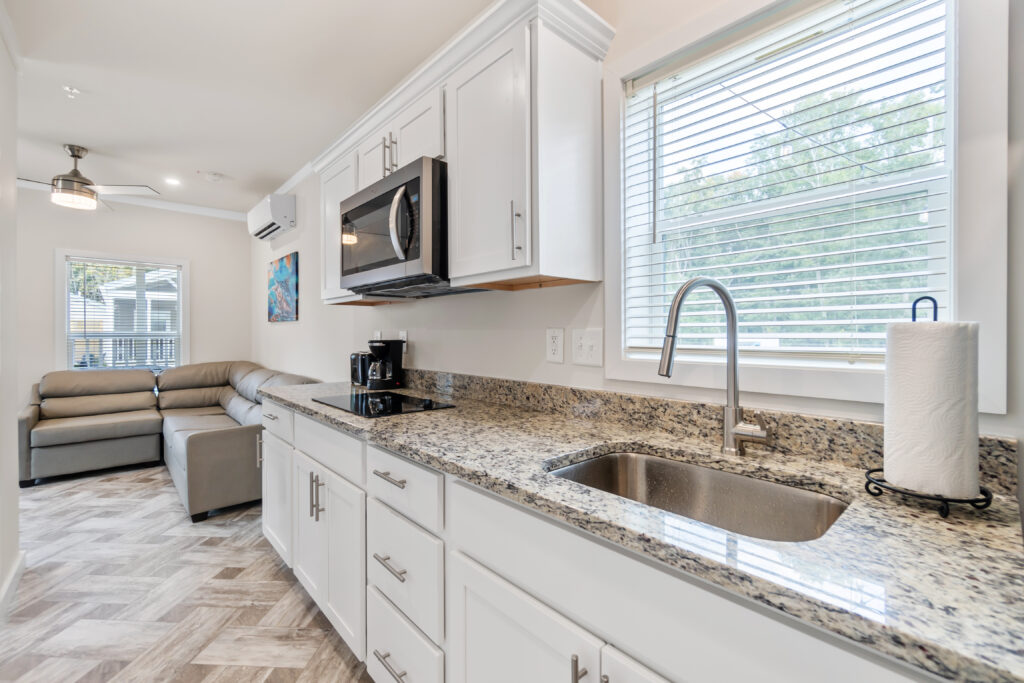
Park models started life looking much more like converted RVs: paneled walls, thin materials and the look of a camper you’d tow behind a truck. That has changed. Great Outdoor Cottages now sources siding, roofing and trim from the same buying consortium as builders putting up $1.5 million beach homes. Quartz countertops. Real drywall. Wood cabinetry. Residential-style appliances. A 399-square-foot cottage can still be small and affordable without sacrificing quality. It still runs on a standard 50-amp RV plug and normal site hookups. Inside, you’d never guess.
There’s a reason durability matters as much as finish. Standard rental RVs can wear out quickly under heavy rental use, Correa said, speaking from Blue Water’s own experience renting RVs to guests. Cottages are built to last much longer, he said, in part because when something breaks, operators can often turn to standard residential materials and suppliers rather than specialty RV parts.
Blue Water’s own maintenance teams have fed that experience directly back into the design process. Floating shelves get ripped off. Tables end up outside in the rain and warp. Once you’ve replaced enough end tables, you stop building them as an option and start building breakfast bars directly into the wall instead.
A friend of both companies has a line Kraeuter likes to repeat: “Nothing parties like a rental.” The product was engineered around that truth, not just around what looks good in a brochure.
Cottages Open a New Customer Segment
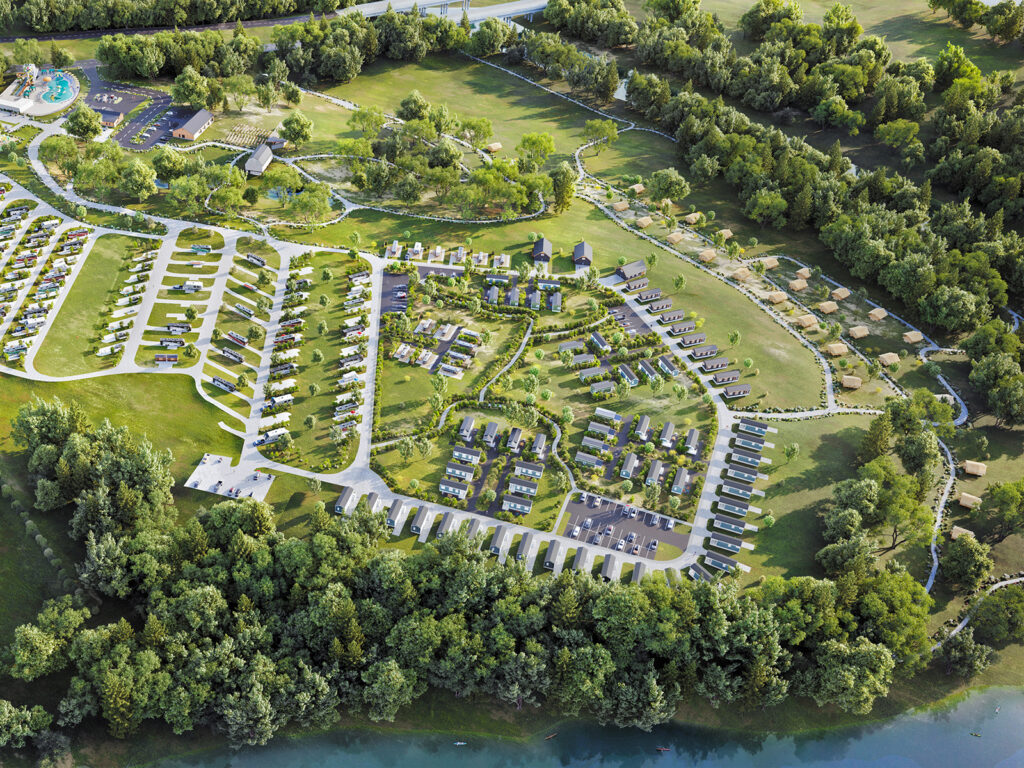
Put the pieces together. Cottages open a customer segment a park may never have been competing for in the first place. They give guests the comfort of a real home, in a footprint as small as 399 square feet, without asking them to give up the outdoor experience.
They also allow family and friends of RV owners to share that same outdoor hospitality experience without owning a rig themselves. A premium cottage isn’t necessarily competing with an existing RV site. In many cases, it is bringing an entirely new customer onto the property and creating a new source of revenue from land, infrastructure and amenities the operator already owns.
FAQ
Does a park model cottage compete with an RV pad site?
No. Kraeuter's framing is that cottage guests are comparing the option to a hotel room, Airbnb, or VRBO — not deciding between a cottage and a pad site. RV owners and cottage guests are different customers making different decisions, so a cottage brings a new customer to the property rather than cannibalizing existing site revenue.
How much revenue can a park model cottage generate?
An $80,000 park model can generate $20,000 to $50,000 in annual revenue at the right property, and sometimes more at premium resorts, according to numbers Kraeuter shared on the Upstream podcast.
Why are RV parks adding cottages now?
Do park models still look like RVs?
No. Modern park models from builders like Great Outdoor Cottages use residential-grade siding, roofing, and trim, quartz countertops, real drywall, and wood cabinetry — sourced from the same buying consortium as $1.5 million beach homes. They still run on a standard 50-amp RV plug and typical site hookups.
Are park model cottages durable enough for rental use?
They're built specifically for heavy rental turnover — a different design standard than an RV outfitted for personal use. Design choices like built-in breakfast bars instead of freestanding tables came directly from Blue Water's own maintenance data on what breaks under rental conditions.
What size are these cottages?
As small as 399 square feet, which keeps the unit affordable while still delivering a residential-style two-bedroom layout.
________________________________________________________________________________________
About Matt Kraeuter
Matt Kraeuter is the CEO of Great Outdoor Cottages. His path into manufacturing wasn't linear — he started his career in law and spent years as outside counsel and later in-house counsel to a federal defense contractor. He now advises park owners on the revenue math behind underutilized site pads and leads Great Outdoor Cottages' push to bring residential-grade quality to park-model construction.
About Blue Water
Blue Water is a family-owned hospitality company founded in 2002 by Jack and Todd Burbage in Ocean City, Maryland. It's the largest third-party manager of RV resorts and outdoor hospitality in the U.S., overseeing 70+ properties across 25 states — including RV resorts, campgrounds, glamping sites, hotels, marinas, and attractions — with a team of more than 1,600 hospitality professionals. Blue Water applies hotel-industry operations, revenue management, and marketing discipline to the outdoor recreation space.