What RVs Move America Week Means for Campground Operators — And What to Do About It
Quick answer: Rafael Correa, Blue Water's President & CFO, along with RV and outdoor hospitality industry leaders, spent four days in Washington DC this month advocating for policies that directly affect campground booking volume, repeat visit rates, and operational compliance. The biggest near-term issue for operators isn't on the policy agenda at all — it's a 2028 electrical safety requirement called GMI that most campgrounds haven't started planning for.
Fifty-two million Americans went camping in 2025. That number represents real growth — and a lot of industry effort since 2019. But it also obscures a problem that every campground operator should be watching closely right now.
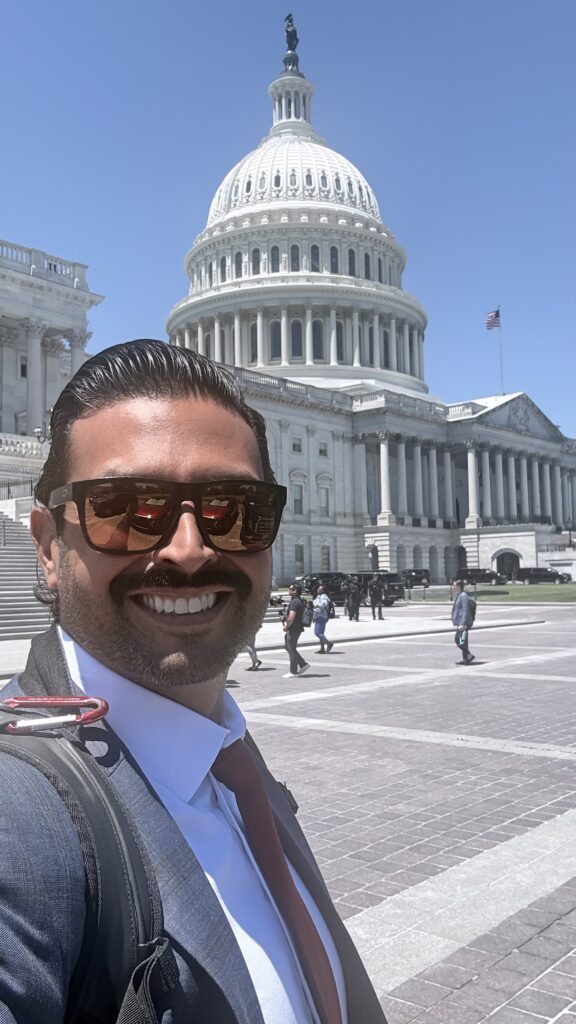
Last week, the RV and campground ecosystem converged on Washington DC for RVs Move America Week organized by the RV Industry Association (RVIA). Rafael Correa, Blue Water’s President and CFO joined manufacturers, dealers, campground associations, and industry leaders from more than a dozen states. They spent four days making the case for a legislative agenda with direct implications for campground revenue, electrical infrastructure, and long-term market health.
Here is what happened, what the data means for operators, and the one technical requirement coming in 2028 that most campgrounds are not yet prepared for.
What Is RVs Move America Week — and Why Operators Should Care
RVs Move America Week is the RV industry's primary annual advocacy event in Washington DC, organized by the Recreation Vehicle Industry Association (RVIA) and supported by a coalition that includes the RV Dealers Association, KOA, OHI, and campground associations from more than a dozen states — among them Texas, Pennsylvania, New York, New Jersey, Michigan, Wisconsin, and both Carolinas.
This is not a conference. There are no vendor booths. The structure is straightforward: briefings on the industry's legislative priorities, followed by a full day of meetings with congressional offices.
What made this year significant isn't the agenda, it's who was in the room. That breadth of coalition carries weight in congressional conversations in a way that any single association simply cannot replicate. When an industry presents a unified voice, it gets taken seriously.
For campground operators specifically, every legislative priority on the agenda has a direct connection to how many people are camping and how frequently they return. This is not abstract policy. The outcomes of these conversations shape the market conditions operators plan against every year. For campground management companies like Blue Water that operate at scale across multiple markets, the compounding effect of these policy outcomes is material — small changes to RV loan accessibility or tariff structure show up in booking volume within 18-24 months.
The Participation Gap: Why Repeat Visitors Are the Real Metric
The industry has a participation problem, and the data is specific enough to quote directly.
In 2019, 12% of camping households camped just once that year. By 2025, that number is 34%. The share of one-time campers has nearly tripled — while total participation grew to 52 million people, up 24% since 2019.
Toby O'Rourke of KOA put the problem into focus at the RV Industry Power Breakfast in Elkhart just weeks before the Washington event: the industry doesn't have an awareness problem. It has a participation problem.
For campground operators, the implication is direct. A guest who returns three times annually generates roughly four to five times the lifetime revenue of a guest who visits once and doesn't come back. When more than one in three camping households is effectively a single-visit cohort, operators are running a leaky bucket — filling the top constantly, losing too much out the bottom.
This reframes what matters operationally. It is not enough to fill sites for peak season. The campgrounds gaining ground right now are treating the second visit as the primary KPI — designing check-in experiences, amenities, loyalty touchpoints, and programming around what turns a first-time camper into a repeat guest. This is exactly the kind of operational focus that separates professionally managed campground and RV resort properties from self-managed ones — and it's reflected in the revenue gap between the two.
What the K-Shaped Economy Is Doing to Campground Revenue
The macroeconomic context compounds the participation gap, and it's splitting the camping market along income lines in ways that affect different types of operators very differently.
High-income campers are accelerating. They're booking premium sites, upgrading RVs, and increasing trip frequency. For glamping operations and upscale campground resorts targeting this demographic, demand has not softened.
Middle and lower-income households are compressing recreation spending. Fuel prices continue to suppress long-haul RV travel — a 500-mile trip costs materially more than it did in 2022. Tariffs on manufacturing inputs have pushed up RV purchase prices across the board. And interest rates, while slowly improving, remain a friction point for first-time buyers. Recent strong jobs data has actually increased the probability of additional rate hikes rather than cuts, which extends that friction.
For campground operators, this creates a strategic positioning question: who is your core guest, and how is their ability — and motivation — to camp changing? A 60-site RV park serving drive-to, price-sensitive guests faces a fundamentally different revenue trajectory than a resort property serving premium bookings from a high-income demographic.
Neither position is inherently better. But planning 2026 occupancy and rate strategy as if demand is uniform across the guest spectrum is the mistake that catches operators off-guard. The K-shaped split is real, it's accelerating, and the policy agenda in Washington is designed in part to address it — specifically, by making camping more accessible and affordable at the mid-market level where the participation gap is most acute.
The Policy Wins on the Table and Their Line-of-Sight to Campground Revenue
The legislative priorities the industry brought to Capitol Hill this year each have a traceable connection to campground operations.
Tariff relief on manufacturing inputs. Tariffs have increased the cost of building a new RV at every price point. Higher RV prices mean fewer first-time buyers entering the market. Campground operators are downstream of the RV supply chain in a real way — fewer new RVs sold in a given year means fewer new campers arriving at campsites two to three years later.
USMCA and the Canada trade relationship. A significant portion of RV manufacturing inputs cross the Canadian border. Protecting USMCA trade provisions is a supply chain stability issue that affects production volume and price throughout the industry.
RV loan interest deductibility. Currently, interest on RV loans is deductible only when the RV meets the IRS definition of a second home — a qualification that excludes many RV types. A broader deductibility provision would reduce the effective cost of RV ownership and stimulate both purchases and trip frequency. Of all the priorities on the agenda, this one has the clearest direct connection to campground booking volume.
The America the Beautiful Act. This bipartisan bill protects public lands and outdoor recreation access. It had genuine co-sponsorship on both sides of the aisle. For operators near public lands or whose guests' itineraries depend on access to trails, parks, and natural areas, land access is not a peripheral issue — it's a foundational business condition.
GMI: The 2028 Electrical Safety Requirement Operators Are Missing
This issue surfaced in nearly every committee session and side conversation at RVs Move America Week — and most campground operators still haven't heard about it.
GMI stands for Ground Monitoring Interrupter. Starting with the 2028 model year, it will be required in all new RVs with 30A or 50A electrical service produced in the United States. It's a safety device designed to detect ground faults in the electrical connection between an RV and a campground's electrical infrastructure — checking for a proper ground before allowing power to pass, and disconnecting automatically if ground is lost during use.
The safety intent is sound. The operational implication is the part most operators are missing.
The issue isn't the pedestal itself — it's the electrical infrastructure the pedestal is part of. A GMI checks ground continuity from the RV site pedestal all the way back to the service panel. Older campgrounds with aging wiring, degraded grounding conductors, or deferred electrical maintenance may generate false fault trips with GMI-equipped RVs, even when the RV is functioning perfectly. A guest with a 2028-model unit could experience repeated, unexplained connection interruptions that present as equipment failure — resulting in negative reviews and remediation costs under time pressure.
Campground electrical infrastructure upgrades take time to plan, permit, and execute. Operators who start the audit process now, in 2026, are giving themselves a realistic planning window. Those who wait until 2028 complaints start arriving will be remediating reactively at peak season. RVIA recommends testing ground continuity from each RV site pedestal back to the electrical service panel — commercially available 30A and 50A receptacle testing devices can be used to check compatibility with GMI-equipped RVs. Operators who haven't completed an electrical audit in the past five years should treat this as an immediate priority.
Your Association Membership Is a Business Decision, Not a Formality
The most important thing that came out of RVs Move America Week wasn't a single bill or a specific meeting outcome. It was proof that a unified industry voice carries real weight in rooms where campground operators almost never have a seat.
OHI represents campground operators nationally. State campground associations represent them regionally. Both organizations were present in Washington. Both are only as effective as their active membership allows them to be; an association with 30% active participation cannot advocate with the same credibility as one with 70%.
Campground operators often treat association membership as a line item to evaluate at renewal time. A more useful frame: it is leverage. The cost of membership is modest relative to the policy outcomes it helps protect. A successful RV loan interest deductibility provision would expand the addressable market for every campground in the country. Preserved public land access protects the context in which a significant portion of outdoor hospitality businesses operate.
You do not have to spend four days in Washington to make a difference. Keeping membership current, attending state association events, and staying in contact with state and national association leadership gives those organizations the numbers and the mandate to show up in rooms you will not be in. That matters.
If you're not currently a member of your state campground association or OHI, now is a reasonable time to evaluate membership. If you are already a member, consider whether there are committee opportunities or regional advocacy events where your perspective as an operator adds something.
The industry needs operators in the room — not just paying dues from the outside.
__________________________________________________________________
Frequently Asked Questions
What is RVs Move America Week?
RVs Move America Week is the RV industry's primary annual advocacy event in Washington DC, organized by RVIA and supported by campground operators, RV dealers, KOA, OHI, and state associations from across the country. The event combines industry briefings with a full day of congressional office visits focused on the industry's legislative priorities.
What is the campground participation gap?
The participation gap refers to the growing share of campers who try camping once and don't return. In 2019, 12% of camping households camped just once that year. By 2025, that number was 34%. For operators, this creates a structural repeat-visit challenge that affects long-term revenue more than total participation numbers suggest.
What is a Ground Monitoring Interruptor (GMI) and how does it affect my campground?
A GMI is a safety device required in all new U.S.-built RVs starting with the 2028 model year. It detects ground faults between an RV and campground electrical pedestals. Older campground electrical infrastructure may trigger false fault interruptions with GMI-equipped RVs, creating guest experience problems and requiring infrastructure upgrades. Operators should audit their campground electrical systems before the 2028 rollout begins.
How does the America the Beautiful Act affect campground operators?
The America the Beautiful Act is bipartisan legislation protecting public lands and outdoor recreation access. Campgrounds that draw guests based on proximity to public trails, parks, and wilderness areas have a direct business interest in long-term land access — which this legislation supports. It had co-sponsorship on both sides of the aisle in this session.
How can campground operators get involved in industry advocacy?
The most accessible entry point is active membership in your state campground association and OHI nationally. Both organizations were represented at RVs Move America Week. Active members give associations the numbers and mandate to advocate effectively on Capitol Hill. For direct engagement, RVs Move America Week takes place annually in Washington, DC.
What should campground operators do to prepare for GMI-equipped RVs?
Start with an electrical infrastructure audit of your pedestal inventory — age, grounding condition, and capacity. Most campground management operators recommend completing this audit no later than mid-2027 to allow time for capital planning and contractor scheduling before 2028-model RVs begin entering the market in volume.
About Rafael Correa
Rafael Correa is is the President and CFO of Blue Water, one of the leading outdoor hospitality management and campground management companies in the country. He serves on the executive board of the Outdoor Hospitality Industry (OHI) and is the host of Upstream, a podcast built on a simple belief: a better-informed industry is better for everyone.
About Blue Water
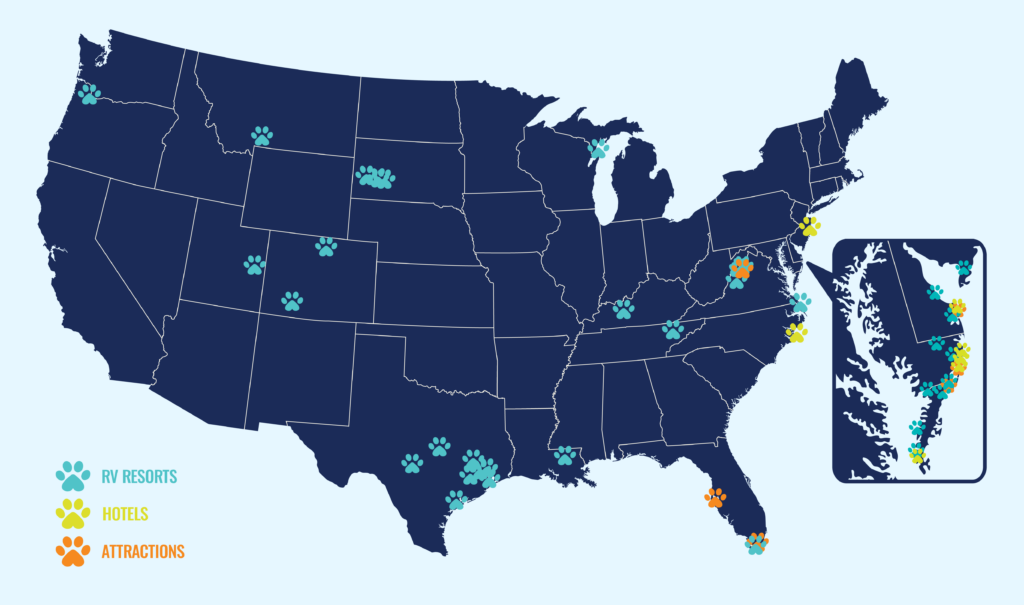
Blue Water is an outdoor hospitality investment, development, and campground management company with more than 20 years of industry experience and a portfolio of more than 60 RV resorts, campgrounds, glamping destinations, and hotels across the United States. The company partners with owners, investors, and operators to create high-performing, guest-focused properties across the RV park, campground, glamping, and hotel sectors. To learn more about Blue Water, visit bwdc.com.
If you'd like to talk through what any of this means for your property, reach out to our team. Contact Us