
A Hotelier’s Guide to Outdoor Hospitality: Why Modern RV Resorts Belong in the Hospitality Conversation
by Rafael "Rafo" Correa, President & CFO of Blue Water Hospitality
The New Frontier in Hospitality
The hospitality landscape is evolving. For decades, hotels, resorts, and vacation rentals have defined the conversation — but a new category is rapidly emerging: outdoor hospitality. Anchored by modern RV resorts, glamping accommodations, and hybrid properties, this sector has grown into a $20 billion+ industry in the U.S. and is expanding faster than traditional hotels.
What was once seen as niche camping for budget travelers is now a mainstream travel preference. Today’s RV resorts deliver resort-level amenities, immersive outdoor experiences, and diversified revenue models — a combination that is catching the attention of major hotel brands. Marriott’s partnership with Postcard Cabins, Hilton’s alliance with AutoCamp, and Hyatt’s collaboration with Under Canvas all signal the same trend: outdoor hospitality is no longer optional. It’s the next big opportunity.
What Exactly Is Outdoor Hospitality?
Outdoor hospitality blends the freedom of the outdoors with the structure of hospitality. This includes:
- RV Resorts & Parks – Designed for both transient and seasonal RV stays with full hookups and Wi-Fi.
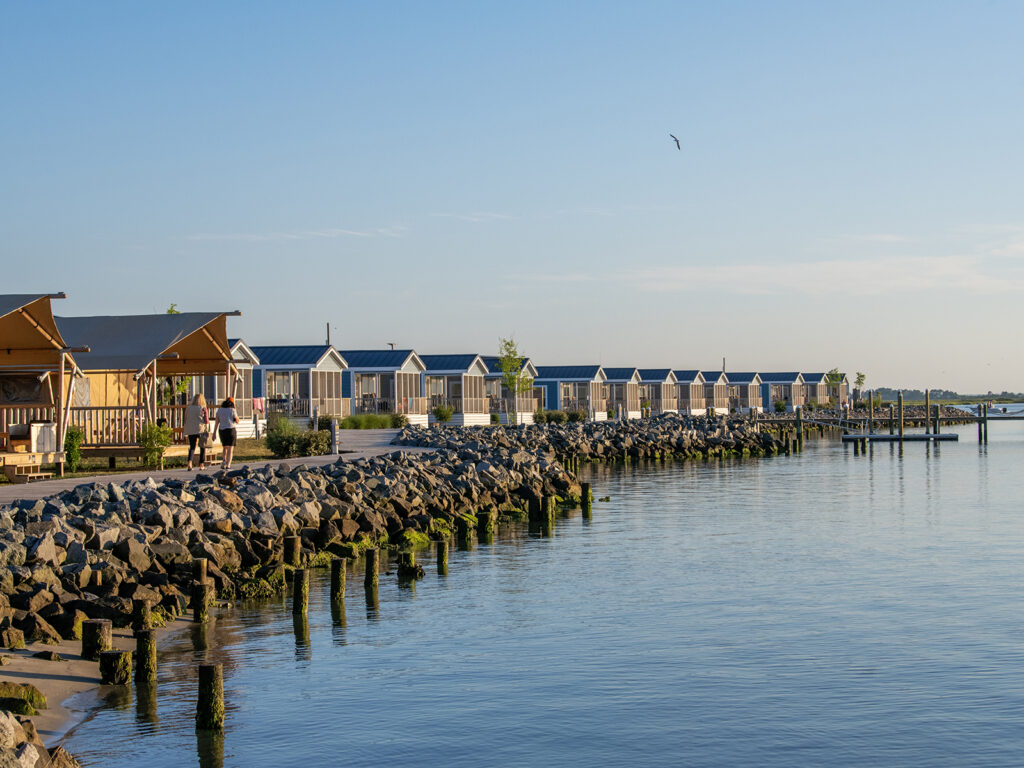
- Glamping Sites – Safari tents, yurts, Airstreams, wagons, and park-model cabins that mirror hotel-style comfort.
- Hybrid Resorts – Properties offering both RV sites and vacation rentals to maximize market reach.
The guest profile is equally diverse, comprising families, millennials, retirees, digital nomads, and, most notably, Gen Z, which is now the fastest-growing segment of campers (KOA, 2025 North American Camping Report).
How RV Resorts Differ from Traditional Hotels
Outdoor hospitality is not just a new product type; it’s a new operating model. Key differences include:
- Asset & Inventory – Hotels sell rooms. RV resorts sell sites, pads, cabins, and glamping units.
- Operations – Lower housekeeping needs, simplified F&B, but greater grounds maintenance.
- Guest Behavior – Longer stays (3–7 nights) and loyalty built on community and lifestyle.
- Seasonality – Resilient in downturns. The 2008 financial crisis and the COVID-19 recovery proved the durability of outdoor hospitality.
- Revenue Management – Multiple inventories to manage (RV pads, rentals, glamping). More direct bookings, fewer OTAs. Specialized PMS tools are required.
- Marketing – More direct guest engagement. Social media and email are highly effective for RV resorts by building connections and sharing experiences.
- Barriers to Entry – Zoning restrictions, permitting, and entitlements make RV resort development more challenging, thereby protecting the existing supply.
Why Travelers Choose Outdoor Hospitality
Guests are gravitating to outdoor resorts for reasons that go beyond price:
- Experiential Travel – Access to nature, national parks, and waterfronts.
- Affordability & Flexibility – Longer family vacations at a fraction of hotel costs.
- Lifestyle & Community – Campfires, social spaces, and pet-friendly amenities foster a sense of belonging.
- Hybrid Options – Travelers without RVs can still enjoy the lifestyle through glamping units.
- Core Memories – Outdoor resorts provide shared experiences that create loyalty.
Growth Drivers Beyond Site Fees
Modern RV resorts don’t just make money from site rentals. They scale through:
- Premium Amenities – Pools, waterparks, marinas, and pickleball courts.
- Experiences – Live music, festivals, and guided tours that drive shoulder-season demand.
- Retail & F&B – General stores, grab-and-go outlets, bars, firewood, and ice sales.
- Rentals – Golf carts, kayaks, and bikes are often high-margin categories.
- Evolving Inventory & Site Mix – Ability to convert RV sites into vacation rentals or luxury pads each season.
- Site Lock Fees – Guests pay an additional fee to secure their preferred site.
The Investment & Development Landscape
From an investor’s lens, RV resorts are compelling:
- Cap Rates & Yields – Often higher than hotels, with long-term resilience.
- Fragmentation – Many parks are still mom-and-pop-owned, creating opportunities for consolidation.
- Branding White Space – With few scaled national brands, there is room for new leaders.
- Data Gaps – Unlike hotels (with STR/CoStar), RV resorts lack consistent reporting, making experienced operators essential.
Strategic Takeaways for Hotel Executives
For hoteliers, outdoor hospitality isn’t just competition, it’s a diversification opportunity:
- Diversification & Portfolio Resilience – Hedge against urban and business travel downturns.
- Cross-Selling – Loyalty members want new experiences; RV resorts expand brand reach.
- Scalable Growth – Site mix optimization and repositioning fuel year-over-year gains.
- M&A Opportunity – Conversions of aging parks with existing entitlements, strategic partnerships, and roll-ups accelerate entry.
Conclusion
Outdoor hospitality is no longer a fringe concept; it has become a mainstream trend. It’s a scalable, profitable, and resilient sector poised to transform the lodging vertical. Those who adapt early, by partnering with experienced operators and embracing the unique dynamics of RV resorts, will be best positioned to lead this next wave of hospitality growth.
About Blue Water Hospitality
Blue Water Hospitality is an owner, developer, and manager of over 60 RV resorts, hotels, and glamping operations nationwide. As the largest third-party management operator of RV resorts and outdoor hospitality in the U.S., Blue Water brings decades of hotel expertise to this fast-growing category.
To learn more, visit www.bwdc.com.